
What Are Merchant Services? A Complete Guide for Businesses
Published:
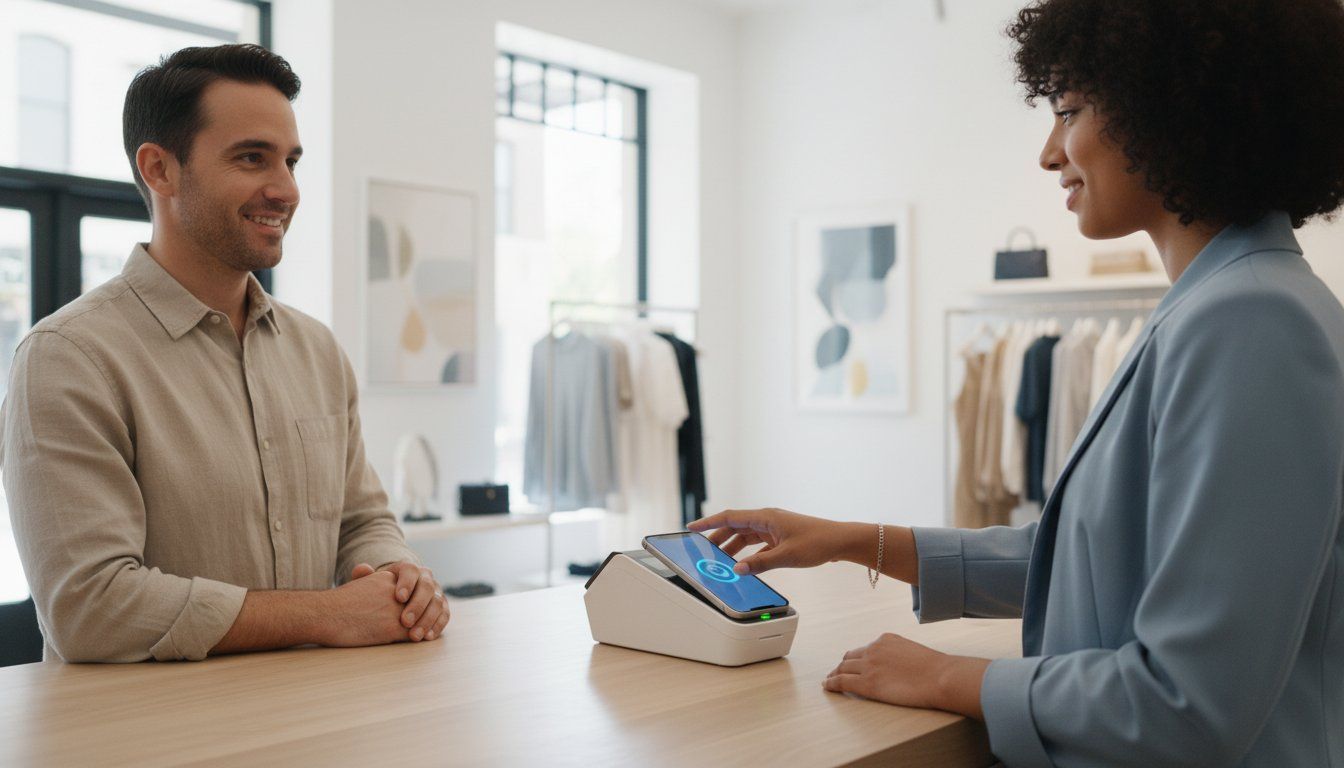
Interchange fees, payment gateways, PCI compliance-does trying to understand how to accept credit cards feel like learning a foreign language? You’re not alone. For many business owners, the world of payment processing is a confusing maze of jargon, hidden fees, and an overwhelming number of providers. Choosing the wrong one can lock you into expensive, long-term contracts that eat away at your profits. That’s why a clear understanding of merchant services is one of the most critical decisions you’ll make for your business.
Consider this your definitive roadmap. In this guide, we will demystify the entire process from start to finish. We’ll break down every component, from the technology that makes a transaction happen to the security standards that protect you and your customers. By the end, you’ll be able to decipher complex pricing models, compare providers with confidence, and select the perfect service that fits your unique business needs-without the guesswork or fear of surprise charges.
Key Takeaways
- Go beyond a simple definition to see how various financial and tech services combine to enable electronic payment acceptance for your business.
- Discover the essential components that must work together, from payment gateways to merchant accounts, to process a single transaction.
- Demystify complex pricing models by learning exactly where your money goes and which fees you can potentially negotiate.
- Choosing the right merchant services provider isn’t one-size-fits-all; learn how to evaluate options based on your unique sales volume and business type.
Table of Contents
- What Exactly Are Merchant Services? The Core Definition for Business Owners
- The Essential Components of a Merchant Services Account
- Understanding Merchant Services Fees and Pricing Models
- How to Choose the Right Merchant Services Provider
What Exactly Are Merchant Services? The Core Definition for Business Owners
At its core, merchant services is a broad term for the bundle of financial and technological services that allow a business to accept and process electronic payments. This includes credit cards, debit cards, digital wallets like Apple Pay, and other contactless methods. It’s the essential link that connects your business, your customer, and the banks involved in a transaction.
To see how these components work together, this short video offers a great overview:
Think of it as the complete ‘financial plumbing’ required to securely move money from your customer’s account to yours. It’s far more than just a business bank account or a physical card reader. In reality, Merchant services encompass the hardware, software, security protocols, and banking relationships needed for every single transaction. This ecosystem has evolved dramatically from simple countertop terminals to sophisticated, omni-channel platforms that unify online, in-store, and mobile sales.
Why You Need a Merchant Services Provider
In today’s digital economy, offering flexible payment options isn’t a luxury-it’s a necessity. A dedicated provider is crucial because they manage the complex backend processes, allowing you to focus on your business. They are your partner for:
This principle of outsourcing complexity applies to the very foundation of your company. Before you can even think about payment processing, you need a properly established legal entity. For entrepreneurs aiming to launch in a global hub, for example, the guidance of a professional setup service like Fast Zone Business can be invaluable for navigating the initial incorporation and licensing steps.
- Meeting Customer Expectations: Modern consumers expect to pay with cards, phones, and online with a single click.
- Enabling Growth: It’s the backbone of e-commerce and essential for any modern retail or service business.
- Handling Security & Compliance: Providers ensure your transactions are secure and compliant with industry standards like PCI DSS.
- Providing Centralized Support: When a payment issue arises, you have one point of contact to resolve it quickly.
Merchant Services vs. A Payment Processor: What’s the Difference?
This is a common point of confusion. A payment processor is a specific company that handles the technical task of transmitting transaction data between the parties involved. It’s a critical component of the system. However, merchant services is the entire package. It includes the payment processor, but also the merchant account, payment gateway, hardware (like terminals or POS systems), software, and customer support. Companies like Strictly simplify this by offering an all-in-one solution that covers the entire payment ecosystem for you.
The Essential Components of a Merchant Services Account
Think of your account as a complete toolkit for accepting payments. While the exact setup varies by business type, most merchant services packages are built from a few core parts that work together in harmony. Understanding the essential components of a merchant services account is the first step to choosing the right solution. Let’s break down this anatomy using a local coffee shop as our example.
The Merchant Account
This isn’t your standard business checking account. A merchant account is a special type of bank account where funds from your card transactions are temporarily held. After the payment network settles your daily sales, the money is transferred from this account into your primary business bank account. For our coffee shop, all the day’s credit card sales for lattes and pastries sit in the merchant account before being deposited as a single lump sum.
Payment Processing & Gateway
Payment processing is the action of securely authorizing transactions and transferring funds between banks. The payment gateway is the digital bridge that connects your point-of-sale (POS) system or website to the processing network. When a customer taps their card at the coffee shop, the gateway encrypts the data and sends it for approval in seconds. While many gateways include a virtual terminal for manual card entry, more advanced workflows now integrate payments directly with agreements. For businesses that rely on contracts, platforms like Chaindoc combine document management, e-signatures, and payment into a single, secure process.
POS Hardware and Software
This is the physical and digital interface where your sales happen. Hardware includes countertop card readers, mobile terminals for farmers’ markets, or integrated tablet systems. The software is the brain, managing not just payments but also inventory, sales reports, and customer data. Our coffee shop uses a modern POS where the tablet software tracks how many croissants are left and the connected card reader seamlessly handles the payment.
Security and PCI Compliance
Protecting customer data is non-negotiable. The Payment Card Industry Data Security Standard (PCI DSS) is a mandatory set of rules for any business that accepts card payments. A good provider of merchant services helps you achieve and maintain compliance by offering secure technology like tokenization (which masks sensitive card data) and advanced fraud prevention tools. This ensures the coffee shop’s payment system is a fortress, not a vulnerability.
Understanding Merchant Services Fees and Pricing Models
For most business owners, the single biggest challenge with payment processing is understanding the cost. When a customer pays with a card, the fee you pay is split between three main parties: the card network (like Visa or Mastercard), the banks involved, and your payment processor. The key to finding the right partner is transparency-knowing exactly what you’re paying for and why.
Common Pricing Structures: Flat-Rate vs. Interchange-Plus
Payment processors typically use one of three pricing models. Flat-rate pricing, used by companies like Square, offers simplicity with one predictable rate (e.g., 2.9% + $0.30) for all transactions. While easy to understand, it can be more expensive for businesses with higher sales volumes. Interchange-plus is the most transparent model, separating the non-negotiable wholesale “interchange” fees from the processor’s fixed markup. This is often the most cost-effective option for established businesses. Lastly, Tiered pricing bundles rates into vague categories like “qualified” and “non-qualified,” often hiding higher costs and should generally be avoided.
Decoding Your Statement: Common Fees to Watch For
Beyond the primary processing rate, your monthly statement may include various other charges. A reputable merchant services provider will always provide a full fee schedule upfront. Be on the lookout for:
- Transaction Fees: The percentage and/or flat fee charged for every sale.
- Monthly Fees: A fixed cost for services like statement preparation, gateway access, or customer support.
- PCI Compliance Fees: A fee for ensuring your business meets Payment Card Industry data security standards.
- Chargeback Fees: A penalty fee assessed when a customer disputes a transaction and you lose the claim.
The Modern Alternative: Zero-Fee Processing with Surcharging
A growing number of businesses are eliminating their processing costs entirely through a model called surcharging. This system passes the credit card processing fee directly to customers who choose to pay with a credit card, while offering no fee for debit or cash payments. This allows you to keep 100% of your revenue. However, it’s critical to use a fully compliant program that adheres to all state laws and card brand regulations to avoid penalties. See how a compliant surcharge program can save your business thousands.
How to Choose the Right Merchant Services Provider
Selecting a payment processor is more than finding the lowest rate-it’s about finding a long-term partner for your business. The “best” provider for a bustling restaurant will differ from the ideal choice for an online-only boutique. To find your perfect fit, commit to comparing at least two to three providers, focusing on overall value rather than just the introductory price. This checklist will guide you through the essential steps to find the right merchant services for your needs.
As you begin your search, it’s helpful to look at established providers. For instance, Merchant Solutions Corp offers services across various industries, making them a solid benchmark for your comparison.
Step 1: Assess Your Business Needs
Before you start comparing providers, you need a clear picture of what your business requires. An honest self-assessment will help you filter out options that aren’t a good match from the start. Ask yourself these critical questions:
- How will you accept payments? Will you primarily use a physical point-of-sale (POS) terminal, a mobile card reader for events, an e-commerce gateway, or a mix of all three?
- What are your sales patterns? Consider your average transaction size and your total monthly processing volume. This information is crucial for determining the most cost-effective pricing model.
- What software integrations are non-negotiable? Make a list of essential tools like QuickBooks for accounting or specific inventory management software that must sync with your payment system.
For larger organizations, this integration extends to enterprise resource planning (ERP) systems. If your company relies on PeopleSoft, for example, you’ll need to ensure your payment processor can feed data into it smoothly. To see how this works in practice, you can learn more about PS WebSolution and their expertise in process automation.
Step 2: Compare Pricing, Transparency, and Contracts
Pricing in the payment processing world can be complex, but a reputable provider will be transparent. Don’t settle for a simple rate quote; demand a detailed proposal outlining every potential fee. Pay close attention to:
- Contract Terms: Are you being locked into a multi-year agreement? Be sure to ask about the cost and conditions of an early termination fee (ETF).
- Fee Structure: Look beyond the processing rate. Ask about monthly fees, PCI compliance fees, chargeback fees, and batch fees.
- Statement Clarity: A provider’s monthly statement should be easy to read and understand. Confusing statements can hide unexpected charges, which is why many businesses now explore providers committed to transparent pricing models.
Step 3: Evaluate Technology, Security, and Support
The right technology and support are just as important as a good rate. Your payment processor is a core part of your operations, so reliability is key. Verify the following:
- Modern Technology: Does the provider offer omni-channel solutions that unify your in-person and online sales data? Ensure their hardware and software are up-to-date.
- Security and Compliance: Your provider must be PCI compliant. Ask about their built-in fraud prevention tools, tokenization, and encryption to protect you and your customers.
- Customer Support: When your payment system goes down, you need help immediately. Check reviews and ask about their support availability (e.g., 24/7 phone support vs. email only).
Empower Your Business with Smarter Merchant Services
Navigating the world of payment processing is a critical step for any modern business. You now understand that a comprehensive account is more than just a way to accept credit cards; it’s a complete ecosystem involving payment gateways, processors, and specific fee structures. The key to success lies not just in finding low rates, but in choosing a provider that offers the technology and support to help you grow securely. Making the right choice in merchant services can significantly impact your bottom line and operational efficiency.
This strategic mindset—optimizing systems for growth and security—often extends beyond business operations. As entrepreneurs build global businesses, many also explore personal global mobility. Navigating the complex world of second citizenship is another critical decision where expert guidance is key. For those considering their options, advisory firms such as Quantome Passport offer specialized support in this area.
Instead of viewing processing fees as an unavoidable cost, what if you could eliminate them entirely? Strictly offers a revolutionary approach with our compliant Surcharge & Dual Pricing Engine. Powered by an AI-Driven Fraud Prevention system and a Unified Omni-Channel Payment Platform, we provide the security and flexibility to unlock your business’s full potential. Discover how Strictly’s zero-fee program can eliminate your processing costs. Take the next step toward smarter, more profitable payment processing today.
Frequently Asked Questions
What’s the difference between a payment processor and merchant services?
Think of merchant services as the complete toolkit for accepting payments, including the account, hardware, and support. A payment processor is a specific tool within that kit. The processor is the company that technically moves the money from the customer’s bank to your merchant account. Your merchant services provider bundles the processor’s function with everything else you need to get paid securely and efficiently, making them your primary point of contact.
Do I need a dedicated merchant account to accept credit cards?
Not always. Payment service providers (PSPs) like Stripe or Square use an aggregate account model, which is faster to set up but may have higher flat-rate fees. A dedicated merchant account is underwritten specifically for your business. This typically provides more stable processing, better rates for higher sales volumes, and more personalized customer support, making it ideal for established businesses looking to scale and optimize their payment processing costs.
How long does it take to get approved for a merchant services account?
Approval times can vary. For a standard, low-risk business with a strong financial history, approval can happen in as little as 24 to 48 hours. However, if your business is in a high-risk industry or has a complex history, the underwriting process may take several days or even a week. The provider needs this time to thoroughly review your application, business model, and credit history to assess potential risk before approval.
What is a ‘high-risk’ merchant account and why does it cost more?
A ‘high-risk’ merchant account is for businesses in industries with a high likelihood of chargebacks or fraud, such as travel, subscription boxes, or CBD sales. It also applies to businesses with poor credit. These accounts cost more because the acquiring bank assumes greater financial risk. The higher processing rates and fees help the provider offset the increased potential for financial losses from customer disputes and fraudulent transaction activity. To further mitigate these risks, many businesses also implement thorough screening for employees or tenants; you can learn more about Instant Background Checks and how they complement your security protocols.
How do I ensure my business is PCI compliant through my provider?
Your provider should actively help you achieve PCI DSS (Payment Card Industry Data Security Standard) compliance. They typically do this by offering PCI-compliant hardware and software, a secure payment gateway, and assistance with completing the annual Self-Assessment Questionnaire (SAQ). Before signing up, ask a potential provider about their specific PCI compliance program, any associated fees, and the tools they provide to make the process straightforward for you.
Can I switch merchant services providers if I’m unhappy?
Yes, you can switch providers, but you must review your contract for an early termination fee (ETF). Many providers use multi-year contracts that include significant penalties for closing your account before the term ends. To maintain flexibility, look for providers that offer month-to-month agreements or have a clear, low-cost cancellation policy. This allows you to switch if you find a better service or lower rates without facing a large financial penalty.
What is the average cost of merchant services for a small business?
Costs vary based on your industry, sales volume, and pricing model, but you can expect to pay between 1.5% and 3.5% of each transaction amount in processing fees. Beyond that, common costs include a monthly account fee (around $10-$30), a payment gateway fee ($15-$25), and potential one-time charges for hardware or annual PCI compliance fees. Always request a complete schedule of fees from any provider you consider.